

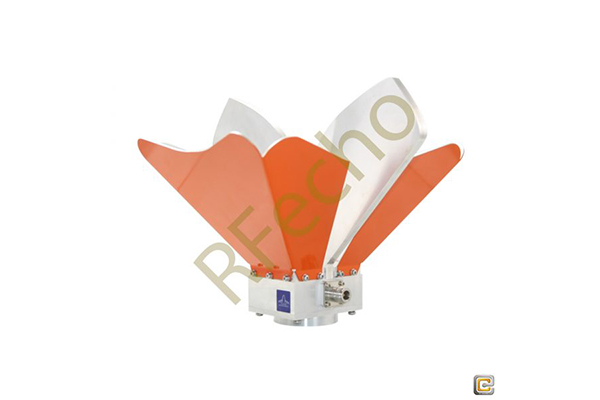
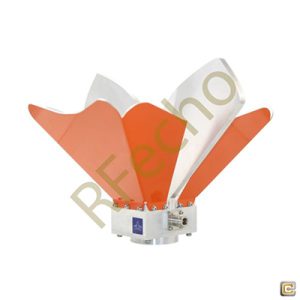
Ultra wide-band dual ridged horn antenna 0.8-18GHz

Gain: 8-13dBi.
VSWR: 2:1 Typ.
Power handling: 500W Max
Designed with user convenience at its core
Ideal for various telecommunications, satellite, radar, and high-frequency RF testing applications.
OBH-08180 Ultra wide-band dual ridged horn antenna also excels in satellite communication
- Description
- Datasheet
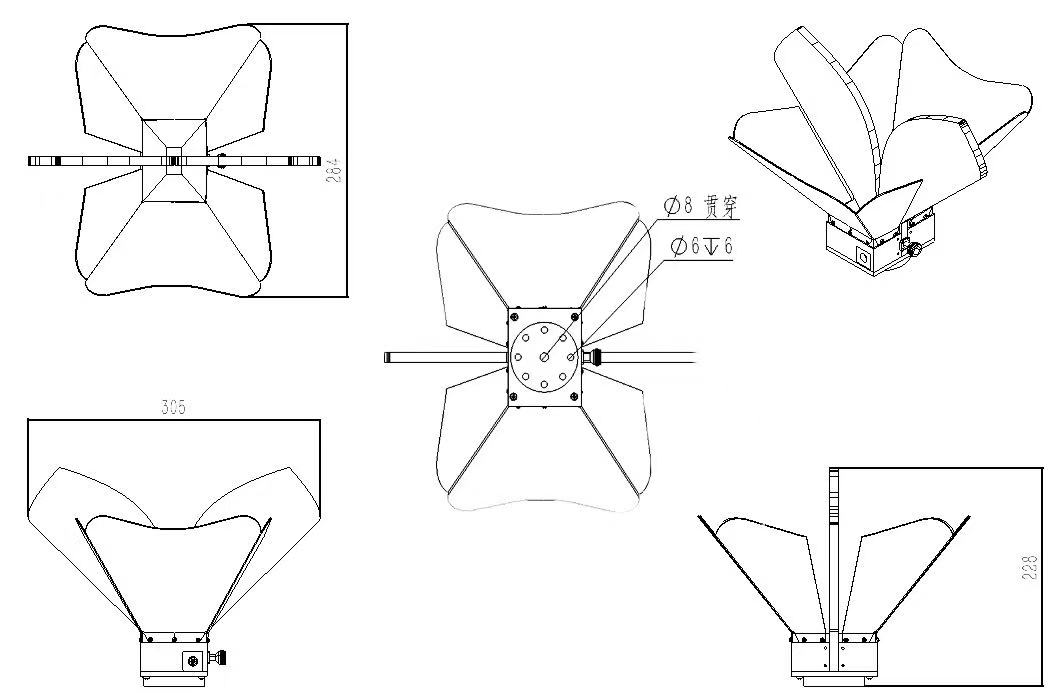
- Outline
- Generated Field Strength
- Certificates & Reports
- Reviews (2)
Description
The OBH-08180 Dual-Ridged Horn Antenna offering a broad operational spectrum from 800MHz to 18GHz, covering the C to Ku bands. Designed with user convenience at its core, the OBH-08180 weighs 1760g, making it easy to transport and deploy in field operations. The OBH-08180 is engineered for precision. Comprehensive test data, including Gain, VSWR, antenna factors, and radiation patterns, is provided, ensuring accurate integration into user systems and optimal performance in real-world conditions. The OBH-08180 stands as a choice, delivering seamless integration, durability, and advanced RF capabilities for a broad range of industries.
This Broadband Dual-Ridged Horn Antenna is an tool designed for various telecommunications, satellite, radar, and high-frequency RF testing applications. Its support for 5G NR Sub-6GHz and higher-frequency bands, including microwave bands, makes it highly versatile for testing modern 5G networks and Wi-Fi technologies that operate in higher frequencies. This antenna also excels in satellite communication, covering C-band, extended X-band, and Ku-band, providing the capability to test satellite uplinks and downlinks across a broader range of frequencies, enabling satellite communication testing. Its ability to support X-band and Ku-band frequencies makes it suitable for more advanced radar systems, commonly used in airborne, military, and space applications. In addition, it also enhances effectiveness in EMC testing, allowing for higher-frequency electromagnetic compatibility testing to ensure equipment compliance with stringent industry standards. Lastly, this antenna is ideal for high-frequency RF and microwave testing, providing a comprehensive solution for engineers and researchers working across a broader frequency spectrum up to 18GHz.Dual-Ridged Horn Antenna https://www.rfecho.com/product-category/emc-antenna/emc-broadband-dual-ridged-horn-antenna/
Broadband Horn Antenna Specifications | |
| 5-14dBi Gain, 0.8 GHz to 18 GHz | |
| OBH-08180 | |
Property | Value |
| Min. Frequency (GHz) | 0.8 |
| Max. Frequency (GHz) | 18 |
| Gain(dBi) | 5-14 |
| VSWR (Max.) | 2.4 |
| Polarization | Single Linear |
| Cross Polar Isolation (dB) | 50 |
| Impedance (Ω) | 50 |
| Features | |
| Linear polarized with high polarization purity | |
| Frequency from 0.8 GHz to 18 GHz | |
| Low return loss / VSWR | |
| Wide bandwidth | |
| Uniform Gain | |
| High Power Handling Capability | |
| Radiation pattern contains only one main lobe over the entire frequency range | |
| Each antenna is calibrated individually in line with ANSI C63.5-2006 | |
Arthur Brooks –
We use OBH-08180 for full-band EMC and radar testing covering 0.8–18GHz. Its gain stays stable 5–14dBi across the whole band, max VSWR only 2.4, greatly cutting signal reflection loss. Single main lobe radiation pattern delivers clean test data, 50dB cross-polar isolation suppresses interference perfectly. Individually calibrated, measurement consistency is outstanding for our lab’s high-frequency projects.
Marcus Reed –
Top-tier performance for university high-frequency research. The 0.8–18GHz ultra-wide bandwidth meets all our spectrum scanning demands. Balanced 5–14dBi gain and limited max VSWR reduce signal distortion significantly. High power tolerance and standardized ANSI calibration make it reliable for long-duration radar and electromagnetic compatibility experiments every day.