Which of the Three Omnidirectional Antenna Radiation Patterns Best Fits Your Deployment
Introduction — Why Radiation Patterns Matter
In wireless setups, the manner in which an antenna spreads out energy through the air truly shapes the clearness and steadiness of your signal. For omnidirectional antennas, ones that send out waves equally in every horizontal way, the radiation pattern stands as the main thing that brings about even coverage and reliable results.
Choosing the perfect shape for radiation can really create a huge gap between a strong, trustworthy network and one filled with holes or noisy disturbances. This guide takes you step by step through the three chief omnidirectional patterns — dipole, collinear array, and ground-plane/dome type — and helps you figure out which one matches your project just right, without any fuss.
Understanding Omnidirectional Antenna Basics
An omnidirectional antenna pushes signals all the way around, a full 360° along the horizon, giving smooth coverage in each direction you can think of. The big differences show up in the vertical plane — exactly how much power heads up or down.
People use these antennas a lot in base stations, IoT networks, and mobile platforms, spots where steady coverage counts more than super-focused reach. Unlike directional kinds, omni models strike a nice balance between good gain and solid signal spread. Most builds keep 50Ω impedance and low VSWR, which lets power flow well and cuts down on bouncing back.
See them as the go-to all-purpose players in wireless coverage — trustworthy, simple to put up, and good for pretty much any wide-open spot you have.
Type 1: Dipole Radiation Pattern — The Classic Doughnut Shape
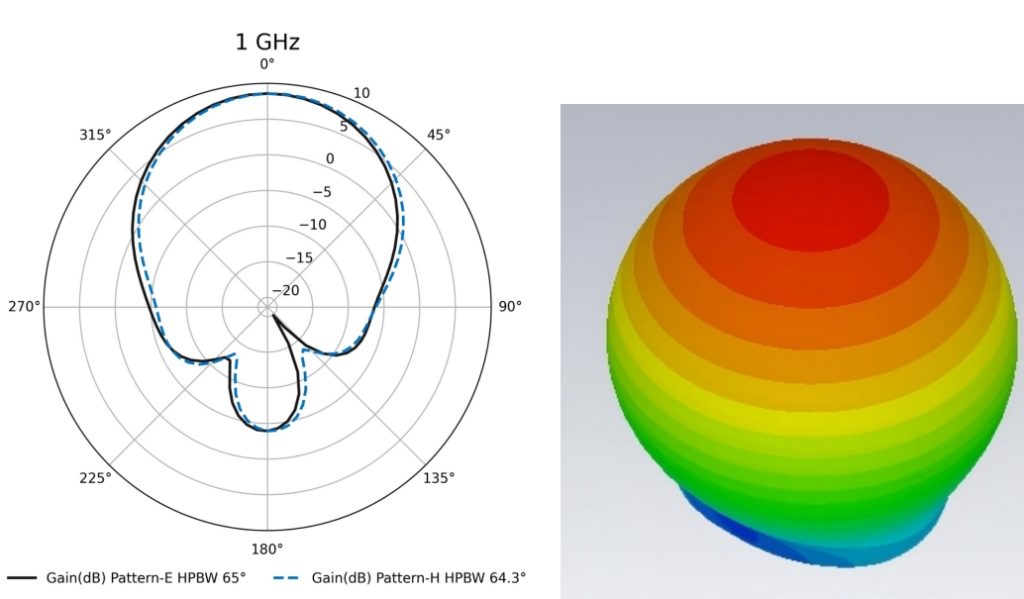
The dipole antenna acts as the starting point for lots of omni styles. Its radiation looks just like a flattened doughnut, pushing energy out evenly all around the antenna, yet leaving tiny empty spots straight up top and down below.
Because it is so basic and easy, the dipole keeps being a top pick for low-frequency or short-distance talking, especially in places where lightweight and low cost really count a bunch.
A great case is the RFecho OPO-00306-100W dipole antenna, running from 30 MHz to 600 MHz. It deals with up to 100 W of power and holds up strong in rough outdoor spots, like fierce winds or salty sea air. The spring-based part lets it bend when pushed hard and bounce right back fast, stopping any breaks.
Best suited for: portable RF systems, vehicle communication, and IoT setups where quick putting together and broad coverage matter a whole lot.
Type 2: Collinear Array Pattern — Extended Reach with Vertical Gain
A collinear array antenna stays omnidirectional, but it stacks stacked dipoles to squeeze the beam down vertically and shove more energy right at the horizon. This brings higher gain and farther reach, all while keeping that full 360° coverage intact.
Think of a thin tube of signal stretching out way farther over the ground — super for base stations, industrial IoT hubs, or outdoor repeaters that want steady strength across big distances.
RFecho’s careful making sticks to the same ideas of steady impedance and little reflection. The OLB-62-20 standard gain horn antenna, for one, hits 20 dBi gain over 11.9–18 GHz with only 1.3 VSWR, proving how exact building gives you radiation you can count on every time.
Best suited for: long-range connections, transmitters up on towers, or network main lines that need even coverage over huge spaces.
Type 3: Ground-Plane or Dome-Style Pattern — Compact and Stable
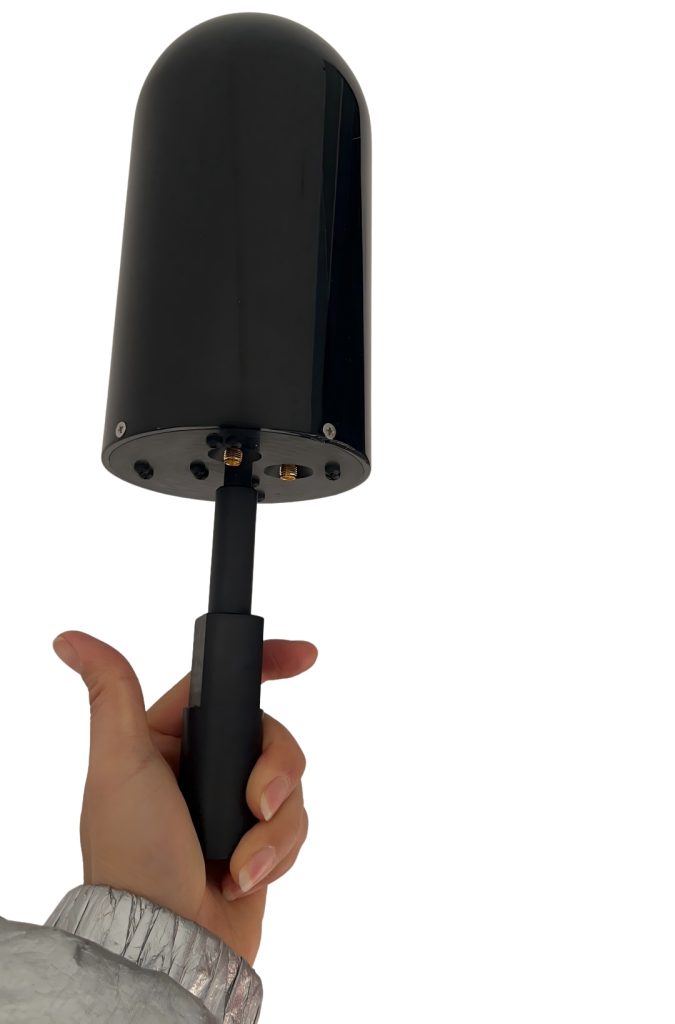
When your spot needs a low-profile antenna or the room is really tight, a ground-plane or dome-type choice gives a wonderful middle ground. Its radiation pattern builds a hemisphere, sending signals out and a bit up.
This works great for Wi-Fi access points, vehicle networks, or marine systems, where even coverage close to the ground is a must. The RFecho OLB-137-20 standard gain horn antenna, going from 5.38 GHz to 8.17 GHz, provides 20 dBi gain and tough build strength, thanks to its cut aluminum body and joined waveguide-to-coax shift.
Best suited for: mobile gadgets, indoor access points, and tiny boxes where balanced coverage stands out as key.
Practical Deployment Considerations
How well it works depends on more than just picking a pattern. Real things like mounting height, material strength, and multipath interference change how the antenna acts out there.
RFecho’s items use aluminum or copper construction with built-in waveguide-coax shifts to lower bounces and hold low VSWR. Here are some useful hints:
- Stay away from putting omnis way too high over people, since that could make a “dead zone” right under it.
- Put in good grounding to cut reflection and make signals more stable.
- Always check coverage after you set it up — quick site checks can stop big fixes later on.
And remember, little changes in placement can boost things a lot. So, take your time. Test a few spots if you can.
Choosing the Right Radiation Pattern
To select the antenna that fits your work:
1. Consider height and location. Dipoles or domes do well in low spots; collinears glow on high towers.
2. Match to the environment. For shiny indoor areas, a wider beamwidth stops empty spots.
3. Define your goal. If you want steady close coverage, choose dipole or dome; for longer reach, go with collinear.
4. Check your frequency band. Line up the antenna’s set range with your system’s band for top efficiency.
A short check on site or a test run often points out which pattern wins in your own setup. It saves time, too.
RFecho Omnidirectional Solutions
With more than 15 years of RF design experience, RFecho gives antennas from MHz to THz frequencies — like standard gain horns, broadband dual-ridge horns, dipoles, mmWave horn antennas and lens antennas.
Each one follows the same smart plan: linear polarization, 50 Ω impedance, and low VSWR for easy signal moving. RFecho helps in satellite communication, EMC testing, radar, and electronic warfare, and they make customized solutions for any size job.
Contact RFecho’s technical team to explore a tailored omnidirectional antenna design for your next wireless project. They are ready to help with ideas.
Conclusion
Every radiation pattern has its own job:
- Dipole gives even, close-range coverage. It is simple and works fast.
- Collinear lifts reach and gain for tower or base spots. You get more distance easily.
- Ground-plane/dome mixes steadiness and small size in crowded areas. It fits tight spots well.
Picking the best one makes sure you have good coverage, less noise, and a network that runs smooth all day. With RFecho’s exact antennas, you can pair top performance and trust to any omnidirectional job. It feels right every time.
FAQ
1. How do dipole and collinear omnidirectional antennas differ?
A dipole hands out even coverage, but a collinear array puts many dipoles together to raise vertical gain and reach farther.
2. Why does VSWR matter?
Low VSWR cuts down signal bounce and power waste, helping transmission work better and last longer.
3. Which antenna type works best for compact setups?
Ground-plane or dome-style antennas bring trusty, even coverage in small spots, such as cars or access points. They stay small yet strong.